
Les Oliviers de Notre - Dame

Commitment and Actions




When we took over the farm, we wanted to give it a new momentum. We established a lavender nursery, replanted about twenty hectares, planted over 1,000 olive trees, and revived several old orchards. This project was accompanied, as early as 2006, by a strong commitment: converting the entire farm to organic agriculture.
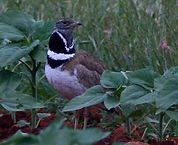
A few years later, in 2011, we took another major step by putting a permanent end to plowing. Since then, the 98 hectares we cultivate have remained under permanent spontaneous cover. This soil conservation approach helps preserve biological life and maintain open landscapes that benefit remarkable wildlife. The Little Bustard thus finds its habitat here, with several singing males observed each year; the Spectacled Warbler readily nests in the lavender fields; and other rare species such as the Heath Grasshopper or Vaccaria thrive on our dry plateaus.
Our hedgerows of pubescent oak and holm oak, once exploited for wood, are now left to evolve freely. After nearly thirty years of growth, with dead trees preserved in place, they host abundant biodiversity: woodpeckers, scops owls, and many other birds. To further enrich these habitats, Laurent has installed nest boxes for birds and bats, in partnership with the Bat Group of Provence.
We have also created several ponds, which have become precious refuges for amphibians: tree frogs, natterjack toads, spadefoot toads, and parsley frogs. In the dry and stony areas, reptiles dominate: green lizards, wall lizards, Montpellier snakes, viperine snakes, and western whip snakes.
All these actions reflect our vision: a form of agriculture that feeds, but above all respects and enriches the life of the soil, the plants, and the animals that share our land.
Our experience

Co-manager
Laurent Bouvin
My passion for nature has been with me since the age of 17, when I began practicing wildlife observation. Trained as an agronomist specialized in forestry, I gradually developed my skills to now work as a professional naturalist and wildlife photographer, alongside my activity on the farm.
I dedicate much of my time to recording the species present on our land. Through citizen science, I have been able to share my findings on Faune PACA and later Faune France, where I am now very active and serve as a reviewer. Over 30 years, I have identified more than 2,450 species and carried out nearly 205,000 observations, a commitment that reflects my determination to protect and share the richness of biodiversity.

Co-manager
Genevière Auric
My career began in horticulture, where I worked for four years in a garden center. This experience inspired me to continue my studies and deepen my knowledge in agronomy, with a specialization in forestry and environment in Belgium (graduat, equivalent to a BTS).
In 1996, at the age of 28, together with my partner Laurent BOUVIN, we took over my parents’ family farm, established in Campagne Monaco since 1900. At that time, the farm covered 90 hectares, cultivated with lavandin and durum wheat under conventional farming. Since then, we have been committed to developing this farm by diversifying its production while preserving its family roots and local identity.